
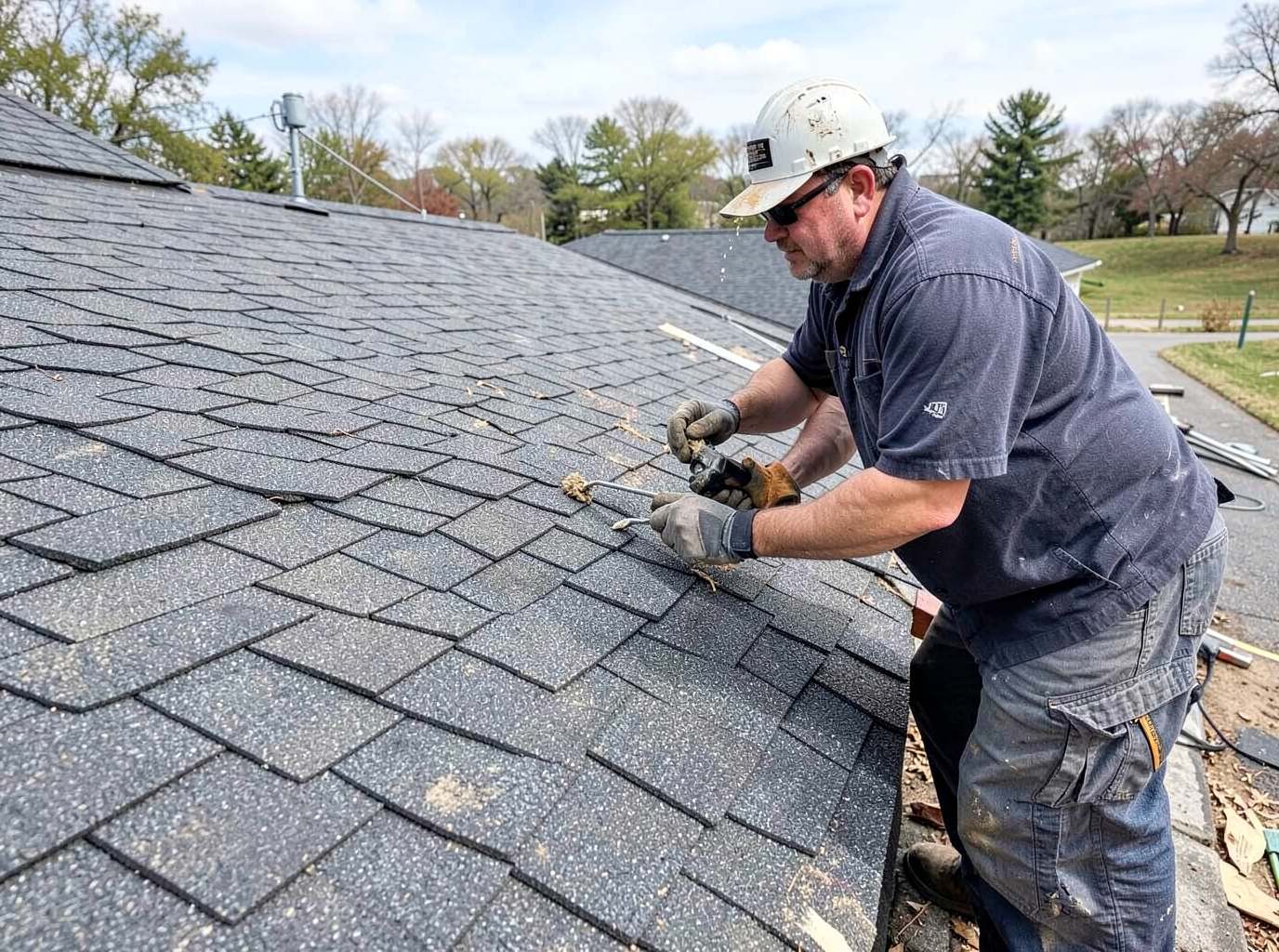
Topeka homes built before 1970 in Potwin, Westboro and College Hill often carry multiple layers of asphalt shingles that trap moisture and accelerate deck rot during humid summers. Full tear-off is usually required to meet current Shawnee County permitting standards and to allow proper inspection of the decking before new shingles go down. Skipping this step in older stock frequently leads to callbacks when underlying plywood fails under the weight of fresh material.
Winter freeze-thaw cycles in Shawnee County push asphalt shingles past their flexibility limits, creating cracks along eaves and valleys that worsen each season. Replacing with 30-year laminated shingles rated for cold-weather impact resistance gives better performance than three-tab products still common on many Highland Park roofs. Proper ice-and-water shield along the first six feet of eaves is essential here because snow often lingers on north-facing slopes near the Kansas State Capitol area.
Downtown Topeka and nearby Highland Park properties sit on flatter lots with limited drainage, so roof pitch and ridge ventilation choices directly affect how quickly melting snow leaves the surface. Adding ridge vents during replacement reduces attic heat buildup that would otherwise shorten shingle life in July and August. Contractors familiar with these blocks also check for proper step-flashing at brick chimneys, a detail that fails on many 1950s–1960s homes when wind-driven rain hits from the south.
Lawrence and Manhattan commuters who own second homes in Topeka often request energy-efficient shingles with higher solar reflectance to offset summer cooling loads. These products perform well locally when paired with adequate attic insulation, but they require careful nailing patterns to avoid cracking in sub-zero temperatures common each January.
Technician insight
In Topeka, the thing that catches most people out with Asphalt Shingle Roof Replacement is discovering two or three layers of old shingles on homes in Potwin and Westboro; the extra weight and trapped moisture force a full tear-off that many owners did not budget for when winter damage finally shows up.
College Hill Bungalow Replacement
Homeowner noticed recurring leaks near the chimney after a heavy January freeze. Inspection revealed cracked three-tab shingles and rotted decking under two prior layers. We performed a complete tear-off, replaced damaged plywood, installed ice-and-water shield, and laid new architectural shingles with ridge venting. The roof now handles Shawnee County freeze-thaw cycles without interior moisture issues.
Asphalt Shingle Roof Replacement Services We Offer
✓Full Asphalt Shingle Tear-Off
Complete removal of existing layers down to the deck before installing new shingles, required on most pre-1970 homes in Potwin and Westboro to prevent trapped moisture.
✓Architectural Shingle Upgrade
Replacement with laminated architectural shingles that offer better wind and hail resistance suited to Shawnee County storms.
✓Ice and Water Shield Installation
Application of self-adhering membrane along eaves, valleys and penetrations to protect against freeze-thaw damage common in Topeka winters.
✓Ridge Vent Integration
Installation of continuous ridge ventilation during replacement to reduce attic heat and extend shingle life through hot Shawnee County summers.
✓Chimney and Wall Flashing Replacement
New step flashing and counter flashing at brick chimneys and walls, a frequent failure point on older Highland Park and College Hill roofs.
Asphalt Shingle Roof Replacement Cost in Topeka, KS
| Service | Typical Range | What Affects It |
|---|---|---|
| Average 1,200–1,600 sq ft single-story home | $5,800–$9,200 | Includes full tear-off; rises with steep pitch or multiple layers |
| Two-story home with dormers | $8,400–$12,500 | Higher labor for access and extra flashing details |
| Architectural shingle upgrade | $1,200–$2,100 | Added cost over standard three-tab on same square footage |
| Ridge vent addition | $450–$750 | Installed during replacement; price varies by roof length |
Ranges are typical for Topeka, KS and confirmed with an exact written quote before any work starts.
How it works
- 1
On-Site Assessment
Inspect deck condition, count existing layers, and note drainage issues typical of flat lots in Downtown Topeka and Highland Park.
- 2
Material Selection
Review shingle options rated for cold-weather flexibility and solar reflectance appropriate for Shawnee County climate.
- 3
Tear-Off and Deck Repair
Remove old shingles, replace damaged plywood, and install ice-and-water shield before new underlayment.
- 4
Installation and Ventilation
Lay new shingles with correct nailing pattern, add ridge vents, and seal all flashings around chimneys and valleys.
- 5
Final Walk-Through
Check every seam and fastener, clear debris, and confirm ventilation meets local code before leaving the site.
Pricing
Pricing depends on home size, number of layers, and pitch; most Topeka replacements fall in the mid-range for Shawnee County.